Description
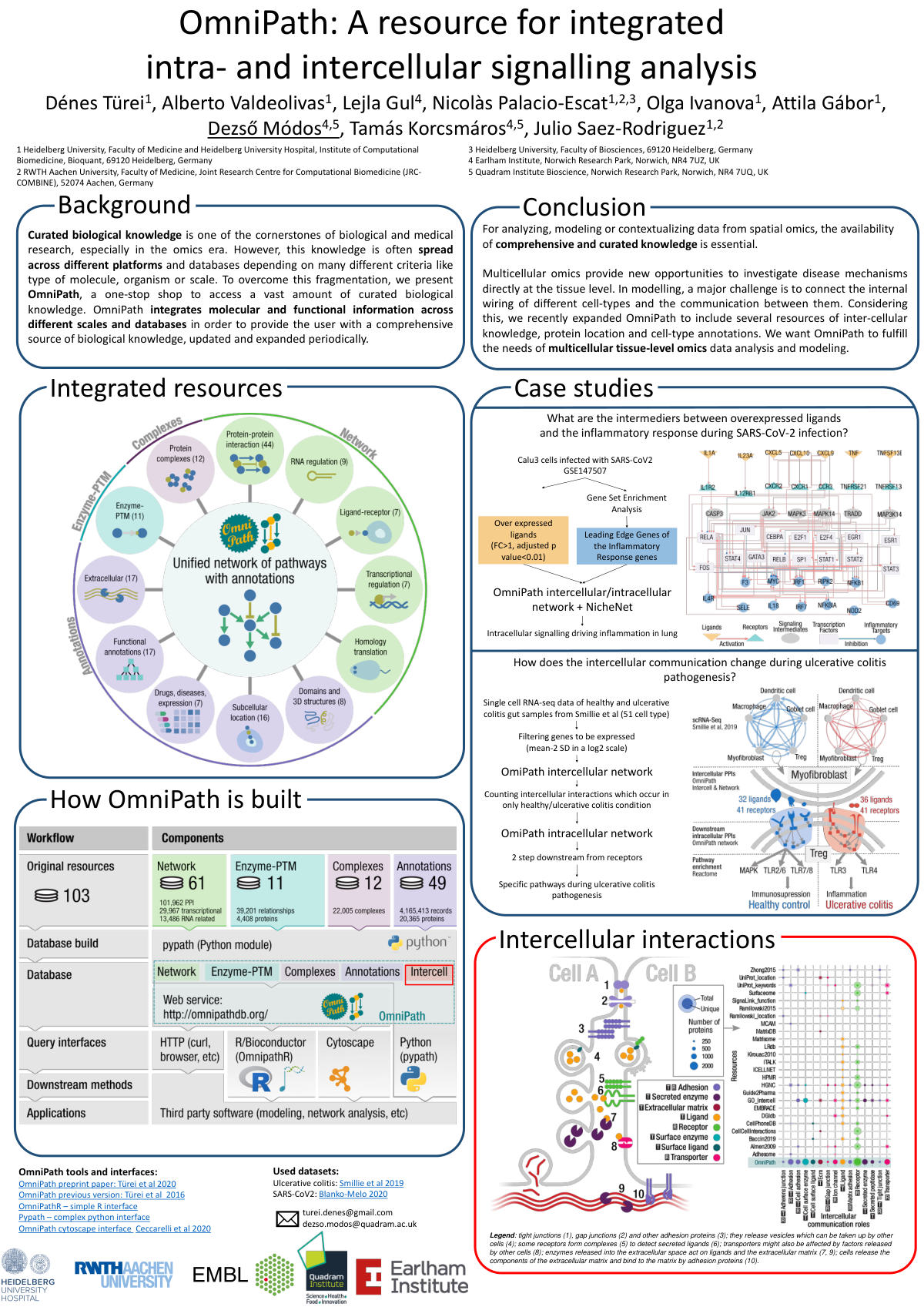
Molecular knowledge of biological processes is a cornerstone in the analysis of omics data and modelling. However, knowledge of intercellular communication is scarce, scattered across different resources, and not linked to intracellular processes. To address this gap, here we present an updated version of OmniPath, which combines over 100 resources in one single database. OmniPath covers the interactions and roles of proteins in intra- and intercellular signal transduction, as well as transcriptional and post-transcriptional regulation. OmniPath provides a comprehensive collection of protein complexes and rich annotations on the properties of proteins, including function, localization, and role in diseases. The resource is available for human, and via homology translation for mouse and rat. The data is accessible via the web service at https://omnipathdb.org/, a Cytoscape plugin, and packages in R/Bioconductor and Python, providing convenient access options for both computational and experimental scientists. OmniPath is a single access point to knowledge spanning intra- and intercellular processes for data analysis. To demonstrate its capabilities, we present two case studies: One about modelling intracellular signal propagation upon SARS-CoV-2 infection, and another one to map intercellular communication in inflammatory bowel disease. OmniPath supports the Disease Maps community as a starting scaffold for any further pathway-based modelling by the collected a priori information. The curated interactions and relevant intracellular and cell-specific annotations can serve as a starting point for more advanced, pathway-specific modelling.
Identifiers
Authors
Dénes Turei
Heidelberg University, Faculty of Medicine and Heidelberg University Hospital, Institute of Computational Biomedicine
Alberto Valdeolivas
Heidelberg University, Faculty of Medicine and Heidelberg University Hospital, Institute of Computational Biomedicine
Lejla Gul
Earlham Institute
Nicolàs Palacio-Escat Palacio-Escat
Heidelberg University, Faculty of Medicine and Heidelberg University Hospital, Institute of Computational Biomedicine
Olga Ivanova
Heidelberg University, Faculty of Medicine and Heidelberg University Hospital, Institute of Computational Biomedicine
Attila Gabor
Heidelberg University, Faculty of Medicine and Heidelberg University Hospital, Institute of Computational Biomedicine
Dezső Modos
Earlham Institute
Tamás Korcsmaros
Earlham Institute
Julio Saez-Rodriguez
Heidelberg University, Faculty of Medicine and Heidelberg University Hospital, Institute of Computational Biomedicine