Description
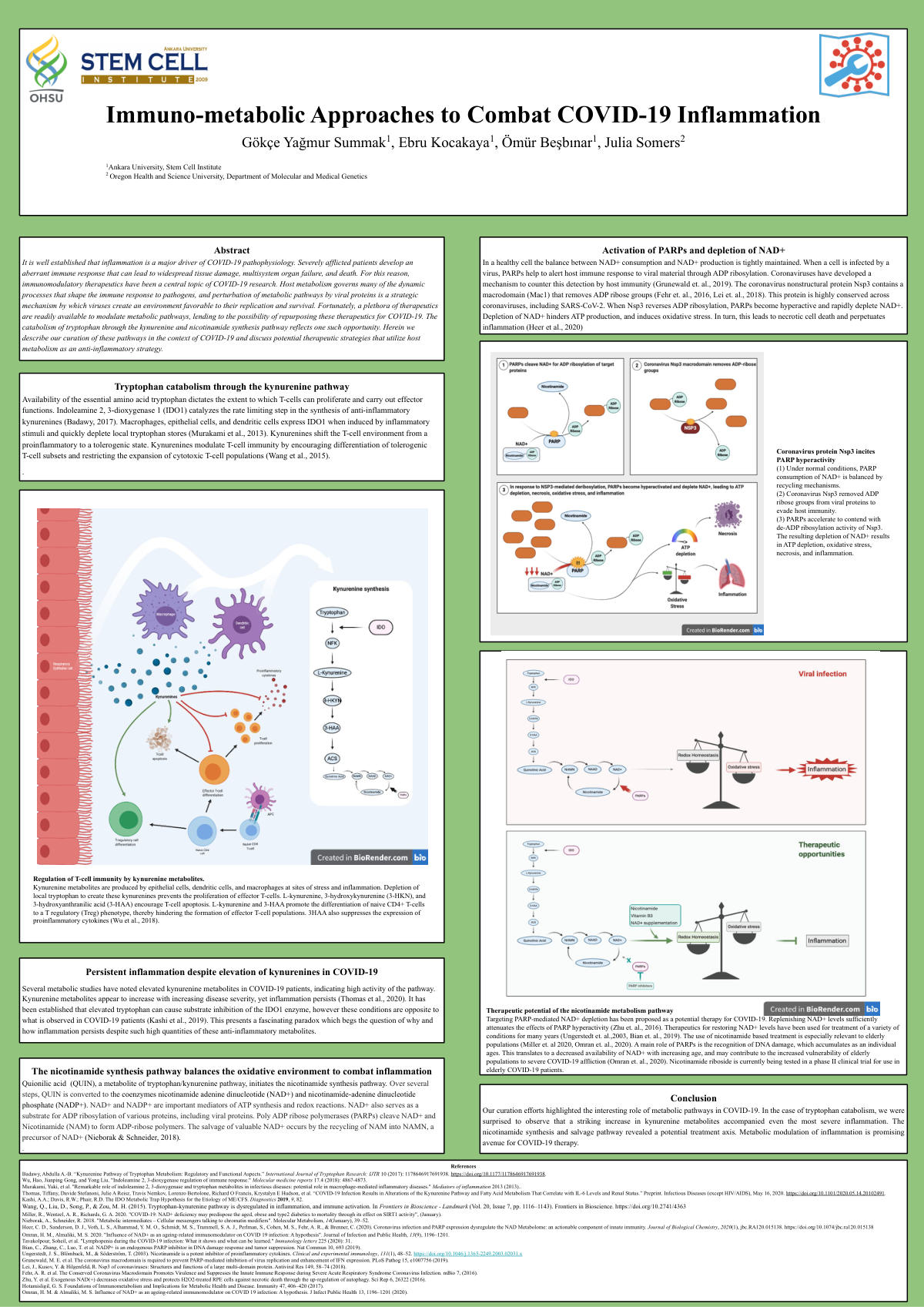
It is well established that inflammation is a major driver of COVID-19 pathophysiology. Severely afflicted patients develop an aberrant immune response that can lead to widespread tissue damage, multisystem organ failure, and death. For this reason, immunomodulatory therapeutics have been a central topic of COVID-19 research. Host metabolism governs many of the dynamic processes that shape the immune response to pathogens. Perturbation of metabolic pathways by viral proteins is a strategic mechanism by which viruses create an environment favorable to their replication and survival. Fortunately, a plethora of therapeutics are readily available to modulate metabolic pathways, lending to the possibility of repurposing these therapeutics for COVID-19. One enzyme that operates as a critical metabolic controller of host immune response is indoleamine 2,3 dioxygenase (IDO). IDO catalyzes the rate limiting step in the synthesis of anti-inflammatory kynurenines and the coenzymes nicotinamide adenine dinucleotide (NAD+) and nicotinamide-adenine dinucleotide phosphate (NADP+). Kynurenines modulate T-cell immunity by encouraging differentiation of tolerogenic T-cell subsets and restricting the expansion of cytotoxic T-cell populations. Several studies have noted elevated kynurenine metabolites in COVID-19 patients, indicating high activity of the pathway. Produced downstream of kynurenine metabolites, the coenzymes NAD+ and NADP+ are fundamental to metabolic redox reactions and ATP production. In response to DNA damage, oxidative stress, and viral infections like COVID-19, stress-induced Poly ADP ribose polymerases (PARPs) process NAD+ into nicotinamide (NAM). Hyperactivity of PARPs increases pro-inflammatory cytokine production, depletes local NAD+ and ATP, and can trigger cell death. PARP hyperactivity is linked to serious clinical manifestations of inflammation including ventilator induced lung injury, ischemia/reperfusion, and sepsis. Our curation efforts highlighted the potential that targeting the kynurenine and nicotinamide synthesis pathway may reduce inflammation severity in COVID-19. Feedback inhibition of PARPs by NAM has been suggested for COVID-19 therapy. Supplementation of the immunomodulators NAD+ or Vitamin B3 (which contains NAM and niacin as precursors) may also serve to stimulate the protective effects of the kynurenine and nicotinamide synthesis pathway.
Conference Information
Immuno-metabolic Approaches to Combat COVID-19 Inflammation
Identifiers
Authors
Gökçe Yağmur Summak
Ankara University
Ebru Kocakaya
Ankara University
Ömür Beşbınar Besbınar
Ankara University
Julia Somers
OHSU