Description
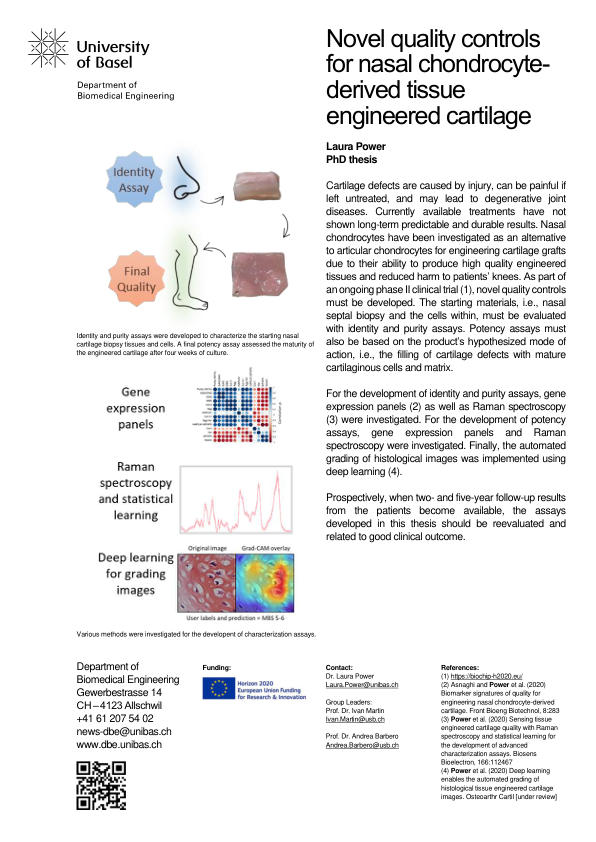
Cartilage defects are caused by injury, can be painful if left untreated, and may lead to degenerative joint diseases. Currently available treatments have not shown long-term predictable and durable results. Nasal chondrocytes have been investigated as an alternative to articular chondrocytes for engineering cartilage grafts due to their ability to produce high quality engineered tissues and reduced harm to patients’ knees. As part of an ongoing phase II clinical trial, novel quality controls must be developed. The starting materials, i.e., nasal septal biopsy and the cells within, must be evaluated with identity and purity assays. Potency assays must also be based on the product’s hypothesized mode of action, i.e., the filling of cartilage defects with mature cartilaginous cells and matrix. For the development of identity and purity assays, gene expression panels as well as Raman spectroscopy were investigated. For the development of potency assays, gene expression panels and Raman spectroscopy were investigated. Finally, the automated grading of histological images was implemented using deep learning. Prospectively, when two- and five-year follow-up results from the patients become available, the assays developed in this thesis should be reevaluated and related to good clinical outcome.
Identifiers
Funding Information
European Commission
BIOengineered grafts for Cartilage Healing In Patients (BIO-CHIP)
Grant: 681103
Award detailsAuthors
Laura Power
University Hospital of Basel