Description
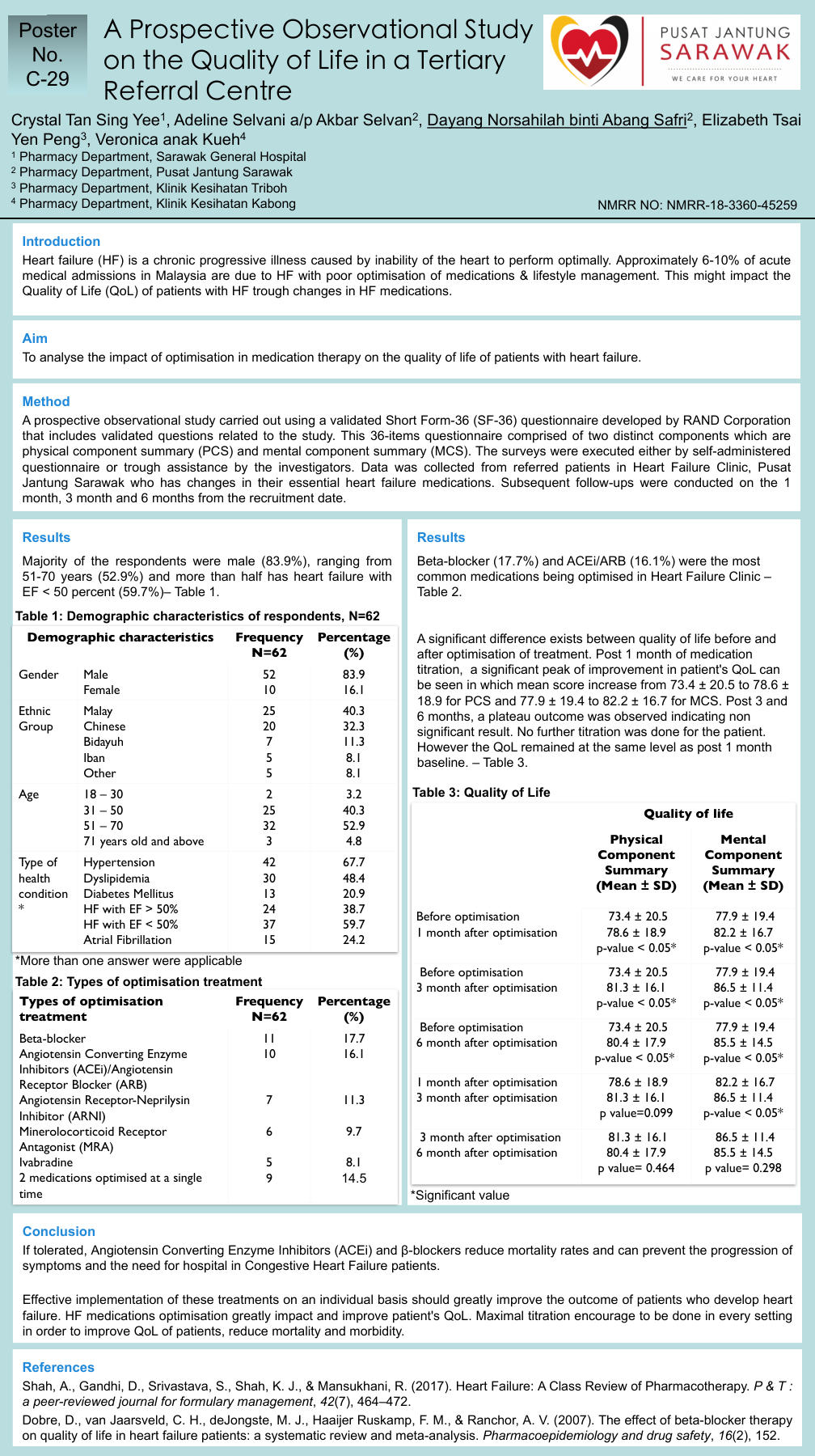
Introduction Heart failure (HF) is a chronic progressive illness caused by inability of the heart to perform optimally. Approximately 6-10% of acute medical admissions in Malaysia are due to HF with poor optimisation of medications & lifestyle management. This might impact the Quality of Life (QoL) of patients with HF trough changes in HF medications. Aim To analyse the impact of optimisation in medication therapy on the quality of life of patients with heart failure. Methods A prospective observational study carried out using a validated Short Form-36 (SF-36) questionnaire developed by RAND Corporation that includes validated questions related to the study. This 36-items questionnaire comprised of two distinct components which are physical component summary (PCS) and mental component summary (MCS). The surveys were executed either by self-administered questionnaire or trough assistance by the investigators. Data was collected from referred patients in Heart Failure Clinic, Pusat Jantung Sarawak who has changes in their essential heart failure medications. Subsequent follow-ups were conducted on the 1 month, 3 month and 6 months from the recruitment date. Results Majority of the respondents were male (83.9%), ranging from 51-70 years (52.9%) and more than half has heart failure with EF < 50 percent (59.7%)– Table 1. Beta-blocker (17.7%) and ACEi/ARB (16.1%) were the most common medications being optimised in Heart Failure Clinic – Table 2. A significant difference exists between quality of life before and after optimisation of treatment. Post 1 month of medication titration, a significant peak of improvement in patient's QoL can be seen in which mean score increase from 73.4 ± 20.5 to 78.6 ± 18.9 for PCS and 77.9 ± 19.4 to 82.2 ± 16.7 for MCS. Post 3 and 6 months, a plateau outcome was observed indicating non significant result. No further titration was done for the patient. However the QoL remained at the same level as post 1 month baseline. – Table 3. Conclusion If tolerated, Angiotensin Converting Enzyme Inhibitors (ACEi) and β-blockers reduce mortality rates and can prevent the progression of symptoms and the need for hospital in Congestive Heart Failure patients. Effective implementation of these treatments on an individual basis should greatly improve the outcome of patients who develop heart failure. HF medications optimisation greatly impact and improve patient's QoL. Maximal titration encourage to be done in every setting in order to improve QoL of patients, reduce mortality and morbidity.
Conference Information
NMRR
Identifiers
Authors
Crystal Tan Sing Yee
Pharmacy Department, Sarawak General Hospital
Adeline Selvani a/p Akbar Selvan
Pharmacy Department, Pusat Jantung Sarawak
Dayang Norsahilah binti Abang Safri
Pharmacy Department, Pusat Jantung Sarawak
Elizabeth Tsai Yen Peng
Pharmacy Department, Klinik Kesihatan Triboh
Veronica anak Kueh
Pharmacy Department, Klinik Kesihatan Kabong