Description
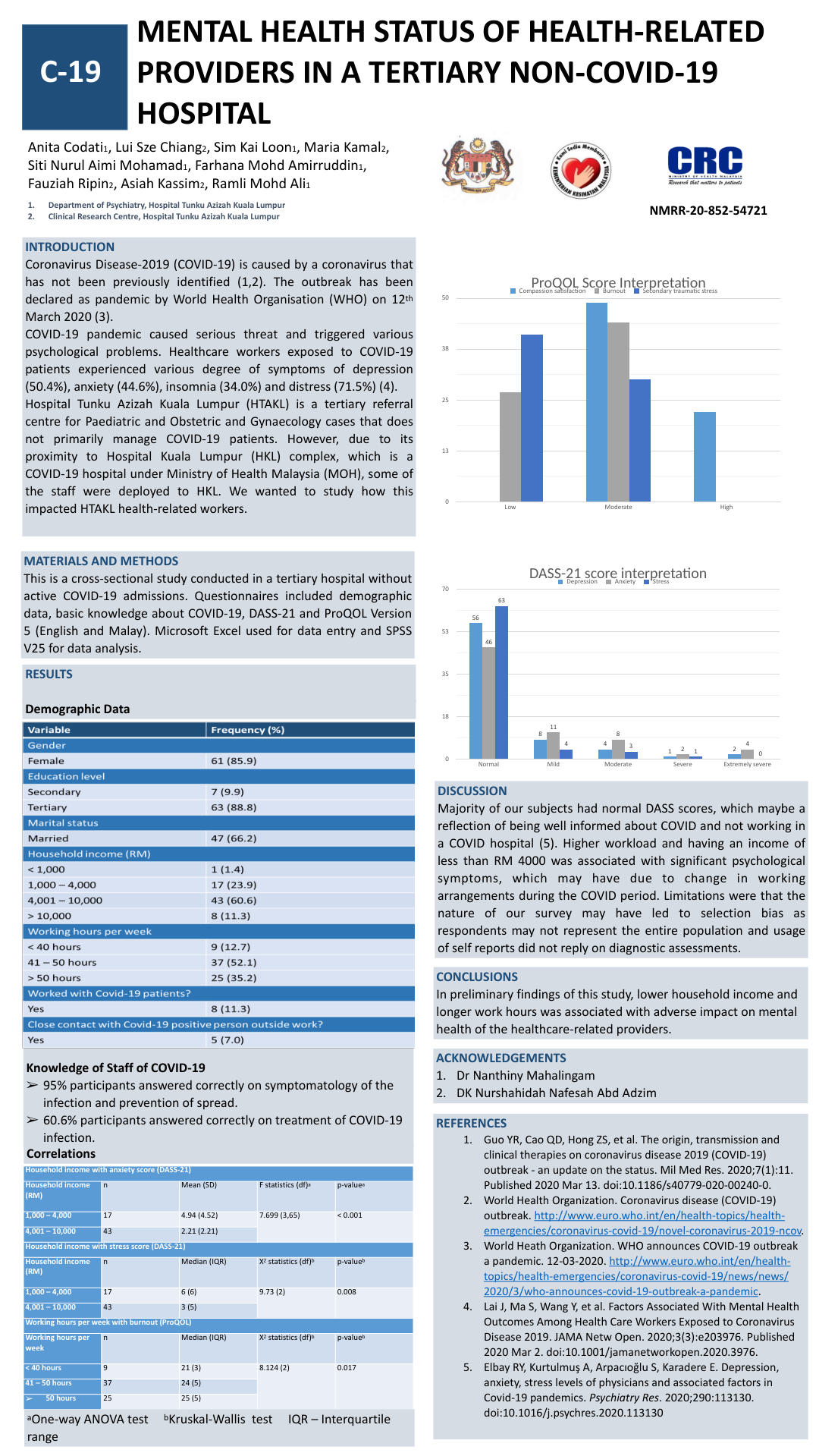
introduction Coronavirus Disease-2019 (COVID-19) is caused by a coronavirus that has not been previously identified (1,2). The outbreak has been declared as pandemic by World Health Organisation (WHO) on 12th March 2020 (3). COVID-19 pandemic caused serious threat and triggered various psychological problems. Healthcare workers exposed to COVID-19 patients experienced various degree of symptoms of depression (50.4%), anxiety (44.6%), insomnia (34.0%) and distress (71.5%) (4). Hospital Tunku Azizah Kuala Lumpur (HTAKL) is a tertiary referral centre for Paediatric and Obstetric and Gynaecology cases that does not primarily manage COVID-19 patients. However, due to its proximity to Hospital Kuala Lumpur (HKL) complex, which is a COVID-19 hospital under Ministry of Health Malaysia (MOH), some of the staff were deployed to HKL. We wanted to study how this impacted HTAKL health-related workers. Materials and Methods This is a cross-sectional study conducted in a tertiary hospital without active COVID-19 admissions. Questionnaires included demographic data, basic knowledge about COVID-19, DASS-21 and ProQOL Version 5 (English and Malay). Microsoft Excel used for data entry and SPSS V25 for data analysis. Results [Refer to Poster]. Discussion Majority of our subjects had normal DASS scores, which maybe a reflection of being well informed about COVID and not working in a COVID hospital. Higher workload and having an income of less than RM 4000 was associated with significant psychological symptoms, which may have due to change in working arrangements during the COVID period. Limitations were that the nature of our survey may have led to selection bias as respondents may not represent the entire population and usage of self reports did not reply on diagnostic assessments. Conclusion In preliminary findings of this study, lower household income and longer work hours was associated with adverse impact on mental health of the healthcare-related providers.
Identifiers
Authors
Anita Codati
Department of Psychiatry, Hospital Tunku Azizah Kuala Lumpur
ORCID: https://orcid.org/0000-0002-0804-6527
Lui Sze Chiang
Clinical Research Centre, Hospital Tunku Azizah Kuala Lumpur
Sim Kai Loon
Department of Psychiatry, Hospital Tunku Azizah Kuala Lumpur
Maria Kamal
Clinical Research Centre, Hospital Tunku Azizah Kuala Lumpur
Siti Nurul Aimi Mohamad
Department of Psychiatry, Hospital Tunku Azizah Kuala Lumpur
Farhana Mohd Amirruddin
Department of Psychiatry, Hospital Tunku Azizah Kuala Lumpur
Fauziah Ripin
Clinical Research Centre, Hospital Tunku Azizah Kuala Lumpur
Asiah Kassim
Clinical Research Centre, Hospital Tunku Azizah Kuala Lumpur
Ramli Mohd Ali
Department of Psychiatry, Hospital Tunku Azizah Kuala Lumpur